Showing posts with label diving gear. Show all posts

Wednesday, 5 September 2012

PowerShot s95 and Dyron wide angle lenses field of view


Some time ago I've changed the camera I use to take pictures underwater from Olympus u1030 to Canon PowerShot s95. The main reason behind the change were the limitations of the u1030 (no custom white balance, smaller sensor, low video resolution), but I was also hoping to get a bit wider angle of view. However, knowing that 'bit wider' will most likely not be wide enough I also bought Dyron 24mm wide angle wet lens and adapter for the Canon housing (WP-DC38). Overall picture quality underwater was good and there was no vignetting. However, first dives showed this was not as wide as I hoped for and I should've probably gotten one of the wider ones or even one of their wet fisheye lenses. Not seeing much difference underwater I've decided to check whether this lens offered any field of view (FOV) improvement. So here's how this was done.

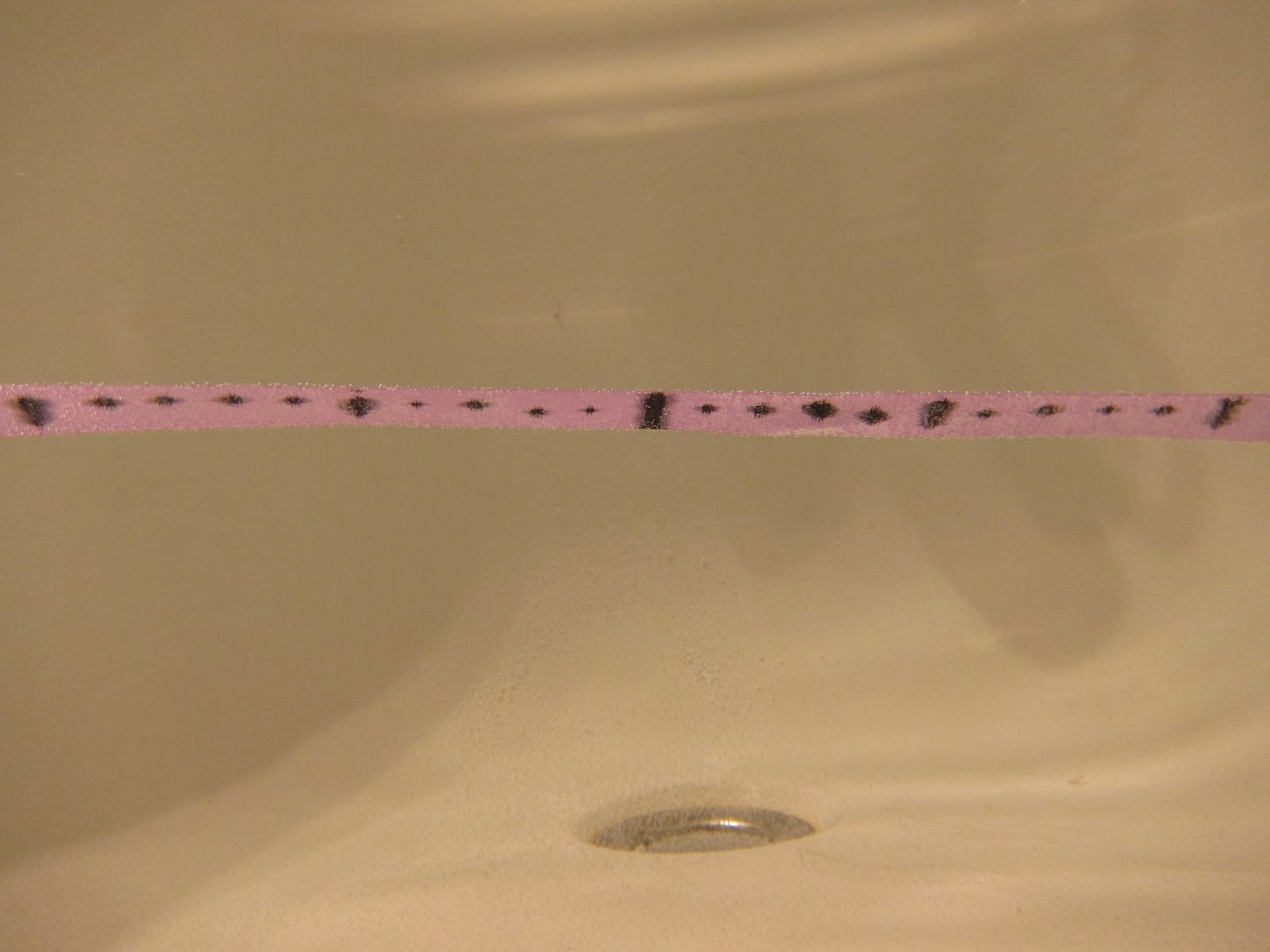
My 'lab' set consisted of a tub filled with water, a ribbon with marks 1cm apart and a measuring tape. I calculated FOV on the surface, underwater without wide angle (WA) lens and underwater with WA lens. To do so, I've placed the camera so that the center of it was 28 cm away from the ribbon and took shots in each setup:
In air
Underwater, with Dyron WA lens
Underwater, without WA lens

Now, I've counted the number of marks visible on each of the pictures and by using trigonometric functions calculated the α angle as the diagram below shows:

Angle of view calculation diagram

On the above diagram:
a - length of the ribbon visible
b - distance from the camera center to the ribbon
α - half of the angle of view

The horizontal angle of view is 2* arctan ((a/2)/b)

The results were:
angle of view in air: 2 * arctan(15 / 28) = 56.35 deg
angle of view in water: 2 * arctan(10.5 / 28) = 41.11 deg
angle of view in water with WA lens: 2 * arctan(13.5 / 28) = 51.48 deg

This is how the horizontal angle of view looks like for each of the above cases:

Uderwater horizontal field of view  for Canon s95 and Dyron WA lenses

DISCLAIMER: the figures below are more of a rough estimates than precise calculations due to the makeshift setup of the lab, but the general principle would be the same for proper measurements and I think they give a good feeling of how things look like with this lens.

Sunday, 15 July 2012

Flooded flashlight

Flooded one of the flashlights... again:/ With salt water in it it was still working, but the wires got rusted through within a couple of minutes after getting out of the water.

Thankfully, with this torch, it's nothing some new parts and a (not so) quick soldering job can't fix :)

Thursday, 8 September 2011

No more last minute dive savers?

Polish authorities are considering making popular decongestants like Cirrus, Acatar, Sudafed and others prescription drugs. This is because they contain pseudoephedrine which can be used as a base for making methcathinone - a psychoactive stimulant sometimes used as a recreational drug and considered addictive. If they do that then it'll be an end to last minute dive-savers:(

Sunday, 15 March 2009

Galvanic corrosion of regulators

Knowing that South East Asia uses almost exclusively A-clamp (INT connector) we purchased two Scubapro's aluminium DIN to INT adapters (yeah, wanted to save some weight on air travel) for our Apex DS4/ATX-40 regulators.We knew that, as the 1st stage is made of admiralty brass and the adapter of aluminium, there might be some problems with galvanic corrosion between these two parts. And there were... Basically galvanic corrosion is an electrochemical process when in which one metal (e.g.. aluminium) corrodes preferentially when in contact with different metal (e.g. brass) and both metals are immersed in electrolyte (e.g.. salt water). This means that a metal that normally wouldn't corrode will when contacted with another one. But what does that mean for a mere mortal? Well, same as with a rusted screw that you cannot to unscrew, two metals can "rust" together. And this is what happened to Magda's reg and her yoke adapter. We tried everything, short of angle grinder and ultrasound bath, but the parts just won't budge:/

Fortunately the preventive measures I undertook (unscrewing the adapter from time to time and greasing the threading with silicon grease) turned out to be sufficient:D

Monday, 14 July 2008

Rescue Diver training on Piłakno Lake

Wow, Rescue Diver training seems to be as hard for the Divemasters as it is for the trainees.. especially when the divemasters are also helping during Deep Diver speciality... This is basically what me and Magda were doing last weekend.

The RD open water training focuses mainly on different ways of getting a diver having a problem to the shore or other safe place. That is why the future RDs where practicing different methods of towing a tired or unconscious diver (sometimes with rescue breathing). A lot attention is also put on searching for a missing diver. During the training trainees were first practicing, under DM supervision, different search patterns (U-shape, square etc.) and then applying these skills in a simulated rescue action.

Viz in the lake was rather poor (less than 5m) and so we had to keep really close to "our" trainee during this supervision. It was then when I got kicked in the face with to-be-rescue-diver's fin and bit off the mouthpiece of my regulator:/ I had to finish that dive on my octo.Damaged Apex Comfobite mouthpiece

Friday, 16 May 2008

Lights and Computers

Today me and Magda got a big shipping of diving equipment: anoter Apeks ATX-40/DS4 regulator for Magda, Suunto Vyper computer for me, AZON canister light system, marker buoy, tools&spare parts and some small stuff. I'll just write a few words about the flashlight and the computer, other stuff, though useful, ain't rocket science :)

First - the computer. Vyper is a dive computer made by Suunto since 1999 so it's a mature design. It allows for diving with air, nitrox up to 50% PPO and can also be used as a depth gauge/timer during deeper dives. A diving computer is a very convenient thing, integrates the three meters you need underwater (depth gauge, timer and thermometer) into one device. A diving computer also allows you to extend your NDL (as compared to tables) becuase it traces the exact profile of your dive (no rounding up the depths nor times), and adjusts the NDLs in real time (Vyper is using Reduced Gradient Bubble Model, RGBM) Planning a dive is also much easier - you don't need the tables and you don't need to write down your diving profiles - the computer does that for you. That said, a computer can fail so you still should bring backup for your dives: a timer, a depth gauge and tables...

Suunto Vyper computer

As for the canister light we bought, the AZON (abbreviation for Autonomiczny Zestaw Oświetleniowy Nurka which translates to Autonomous Diver Light System), it's a fairly good canister LED lamp whith a Goodman handle, made by a Polish diver. It uses 12 AA cells, instead of one acumulator, which are kept in a construction plastic container. These cells should last for at least 90 minutes, though I haven't tested it yet for that long. The light is quite strong (1400 lumens though somewhat dispersed as compared to HID lamps. Charging 12 AA cells is not as easy as charging one big acu, but, and this is the biggest advantage, the price of the lamp is one fourth the price of the cheapest canister lights available elswhere!. The weight of the lamp is very small - only 1kg on the surface and 0,4kg underwater (that's because it doesn't use one big acu and is made of plastic).We are extremely safisfied with this lamp:):)

AZON dive lighting system

Monday, 21 April 2008

Hańcza lake diving

This weekend we were diving in the Hańcza lake - Poland's deepest lake (108 m).


View Larger Map

The weather was fair which was very nice as we were diving in wetsuits and the water had temperature of 4 degrees Celsius (39 F). We used 7+7mm wetsuits and still it was pretty damn cold down there. This dive was also a test dive for our new jackets, and a flashlight I bought the day before the trip (Princeton Tec Rage). The BCD's (Magda's Cressi Aquapro and mine Tusa Liberator) turned out to have a bit too small buoyancy for fresh water, apart from that they did good. The flashlight turned out to be total crap, even for a backup light I intended it to be. It didn't give enough light, was hard to turn on in 5mm gloves and died very fast:(

We did 5 dives during two days to a maximum depth of 30 meters. At this depth it was pretty dark, fortunately we borrowed a bigger flashlight from our friends. Nitrogen narcosis kicked in at 30 meters (probably because of the darkness and water temperature), we started feeling a bit anxious so we turned back and started our ascent. Despite that dive dive was great and we took some interesting photos :

Friday, 18 April 2008

My own jacket - Tusa Liberator

I finally managed to save up enough money to buy a BCD (jacket). I've chosen Tusa Liberator (BCJ-3200) mainly because of the price.


So far I've made about 10 dives with it and it seems to be a good and durable jacket. It's quite comfortable and it has an integrated weight system (Tusa's AWLS). The quick release mechanism of the weight system has a rather secure fastening which does not open unexpectedly. The BCD also has some accessory holders and, ofcourse, pockets. On the down side it has few steel D-rings (only one) and small buoyancy (10 kg for the European S size - my size). All in all I'm safisfied with this jacket - I can start saving on the equipment rental :)

Thursday, 21 February 2008

My first regulator - Apeks ATX-40

My regulator finally, after a month of waiting, arrived. It's my first regulator so im very excited about this. I bought a set of two ATX-40 second stages (one black, one yellow), one DS4 first stage and a small SPG. A driver CD was also included... ermm... cross that out, I think I bought too many computer parts recently:) Anyway the whole set is on the picture.


This regulator set conforms to the EN250 standard, which means it is suitable for cold water diving. There are also two solutions that should reduce the possibility of the regulator freezing: the first stage is environmentaly sealed and the second stage has a heat exchanger mounted on its hose. However, in my set the heat exchanger has not been mounted on the octopus' hose, which is bad, as the person who will be breathing from it is likely to breathe rapidly which in turn is likely to freeze the regulator and cause freeflow.

The regulator has one knob you can turn - the Integrated Venturi System (IVS). The IVS uses the Venturi effect to make breathing easier, however it may also cause freeflow.

I ordered that regualtor online and I forgot to check if it has all the hoses. It turned out that it didn't, the inflator hose was not included, but I've sorted it out.

Now I can't wait to try my new regulator out :) :)

Tuesday, 12 February 2008

How do you make a dive computer?

Actually it is very easy. You only need a depth gauge, a timer, decompression tables (such as the RDP) and a brain:). You must also figure out how to carry all these instruments - my forearm is too short, especially when I also take a compass and a slate... The picture below shows the equation for a dive computer.

The first thing is my depth gauge. It's a capillary one, it consists of a tube open at one end and a scale. You read the depth by checking where the water that's in the tube ends. This particular gauge is 20+ years old, got it from my uncle (the same who found the SCUBA unit). My watch is Timex Ironman, its 200m water resistant (watches must be at least 100m water resistant), and has a timer. The deco table is, obviously, the PADI RDP. These items sum to a dive computer, in the picture you can see a Suunto Vyper that Magda got for Christmas.

Diving with such a dive computer makes you a more conscious diver, however recalculating your No Decompression Limit underwater is more error prone. It's also impossible to get a detailed dive profile, the water temperature etc. That's why the next piece of diving equipment I'm going to buy is a diving computer, probably the Vyper.

Thursday, 7 February 2008

Bargain of the month

Yesterday I've traded an old SCUBA unit for an inflator hose:). I got the SCUBA from my uncle who dug it up somwhere. Our diving instructor, Janusz, collects old diving gear (he has a small museum) so I've asked him if he would accept this unit as a "donation" for his collection, and he was more than happy to.
Then it turned out that the Apeks ATX40 regulator I've ordered recently, though it comes with an octopus and an SPG, doesn't have an inflator hose attached. So I asked Janusz if he could "pay" me with an inflator hose. He again agreed. And that's how the contract of the month was agreed upon:)

Apart from trading yesterday we had another lecture of our Divemaster course. We sat from 18 till 22pm and tried to gain some understanding of the decompression theory. We failed, lost somewhere between M-value and halftime...
But that's OK - we have a month to think about it. Janusz, who is also a technical diver and instructor, is going to Egypt to teach technical diving. He also plans to break his depth record by descending to 180m! We're going to keep our fingers crossed!

Friday, 28 December 2007

My precious Gara 3000 (2)

Yesterday I tried these fins and they are amazing - 6 dolphin kicks is enough for a 25m pool!!!

One funny thing - the lifeguards were very upset when they saw me with the fins. They told me to let them know before doing more than one pool length uderwater. It turned out later that one of them was involved in a freediver drowning accident at Warszawianka aqua park.

Thursday, 27 December 2007

My precious Gara 3000

A photo of Seemann Sub XDrive, Mares Tropic, Mares Avanti X3 (in that order) compared to Cressi Sub Gara 3000 fins. The Garas are, ofcourse, the longest ones:)

Wednesday, 26 December 2007

Diving Xmas gifts

Whole year of talking about diving took effect - no stupid 'what shall I do with this crap' Christmas presents:) We (me and Magda) got lots of books on diving, including 'Last dive' by Bernie Chowdhury, 'Wreck Diving' and some others. I got a Suunto SK-7 diving compass and Magda got a Suunto Vyper diving computer. I also got new fins, not just fins but brand new Cressi Sub's Gara 3000 - they especially made for freediving and are twice as long as normal fins. Can't wait to try them at the swimming pool (it was closed for Christmas)...

Friday, 14 December 2007

Retro diving

A few days ago I've found a photo from a diving summer camp. It was 12 (I think) years ago but I still can remember the equipment we used, and these aren't pleasant memories. It was crap, especially when you compare it to the things that people use nowadays.

Diving some time ago..

My exposure suit was too small and it had some kind of a crotch strap so you can imagine how I felt... I haven't seen such a device since then.

We didn't have BCDs of any kind, even the horsecollar type ones, I didn't even know that there exists something like the BCD. The flashlight I had wasn't very good too: at 5m water pressure was high enought to turn it on or off, depending on its previous state. I was leaking to, however the water didn't seem to change its performance:).

The majority of the regulators we used had mechanical reserve valves instead of pressure gauges. There were also the twin-hose ones (Kajman type).

Almost all the diving we did was in a murky lake with visibility reaching 0.5m, sometimes (when I was the first person I the water that day), 0.7m. Our instructors didn't see what was happening uderwater so they used rope to control us and pull us out in the case of emergency. At the end of, however, the camp we could dive in another lake, with clear water, and up to 10m(!!!) of visibility:)

This was my firts encounter with SCUBA diving, so despite the crappy equipment, I was extremely happy as diving has always been my dream.

Then I stopped diving for 10 years, and when I started it again all was different:)